Choosing the perfect countertop material is one of the biggest decisions in a kitchen remodel. Countertops are not only focal design elements, but they also have to stand up to daily use, resist stains and scratches, and complement the overall aesthetic of the space. At Element Design Build Remodel, we help homeowners weigh their material options and make decisions that fit both lifestyle and design goals. Two of the most popular choices today are butcher block and quartz kitchen countertops. In this article, we’ll explore how these materials compare so you can confidently choose the right surface for your kitchen renovation.
What Are Butcher Block Countertops?
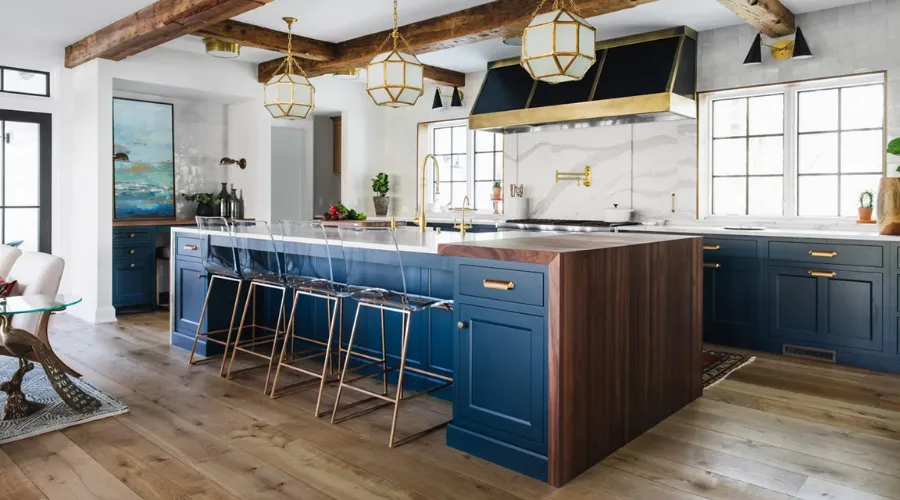
Butcher block countertops are made from strips of hardwood glued together to form a solid surface. Historically used in professional butcher shops because of their durability, butcher block has transitioned beautifully into modern kitchens thanks to its warm, natural look.
Unlike stone or engineered surfaces, butcher block brings an organic, tactile feel to a kitchen. The rich grain patterns and warm hues make it an ideal choice for homeowners who want a cozy, inviting space with visual texture.
What Are Quartz Countertops?
Quartz countertops are engineered stone surfaces made from crushed quartz crystals bound with resins and pigments. Because they are manufactured, quartz surfaces offer consistent coloring and patterns that mimic the look of natural stone like marble and granite.
Quartz has risen in popularity for its blend of beauty and performance. With its non-porous finish and low maintenance requirements, quartz is often a top contender in modern kitchen designs, from sleek contemporary layouts to classic transitional spaces.
Durability: Which Material Holds Up Better?
When comparing butcher block and quartz, durability is a key factor. Quartz is extremely hard and resistant to scratches, chips, and cracks. Its engineered makeup creates a surface that withstands heavy daily use, making it ideal for busy kitchens where meal prep is frequent.
In contrast, butcher block is more susceptible to dents and scratches over time. Because it’s a wooden surface, it can be nicked by knives or heavy pots, and moisture can be an issue if not properly sealed. However, many homeowners appreciate the character that develops as butcher block ages.
That said, quartz typically outperforms butcher block in long-term durability and resilience, especially for homeowners who want a low-maintenance surface that stands up to wear. For remodel projects where lasting durability is a priority, quartz may be the better choice.
Maintenance and Care: Ease of Upkeep
Quartz countertops are well known for being low-maintenance. Because quartz is non-porous, it doesn’t require sealing like natural stone. Everyday cleaning usually consists of warm water and mild soap, and spills are easy to wipe away without worrying about stains setting in.
Butcher block surfaces, on the other hand, require ongoing maintenance. To protect the wood from moisture, bacteria, and stains, butcher block countertops need to be regularly oiled with food-safe mineral oil or conditioner. If water sits on the surface too long, it can lead to warping or discoloration. Scratches and marks can be sanded out, but that means more upkeep over the life of the countertop.
In short, if you want a countertop that stays looking great with minimal effort, quartz generally requires less care than butcher block.
Aesthetic Appeal: Style and Visual Impact
One of the biggest reasons homeowners choose butcher block is its distinctive look and warm aesthetic. The natural wood tones bring organic beauty and texture to a kitchen, creating an inviting atmosphere that’s difficult to replicate with stone or engineered materials.
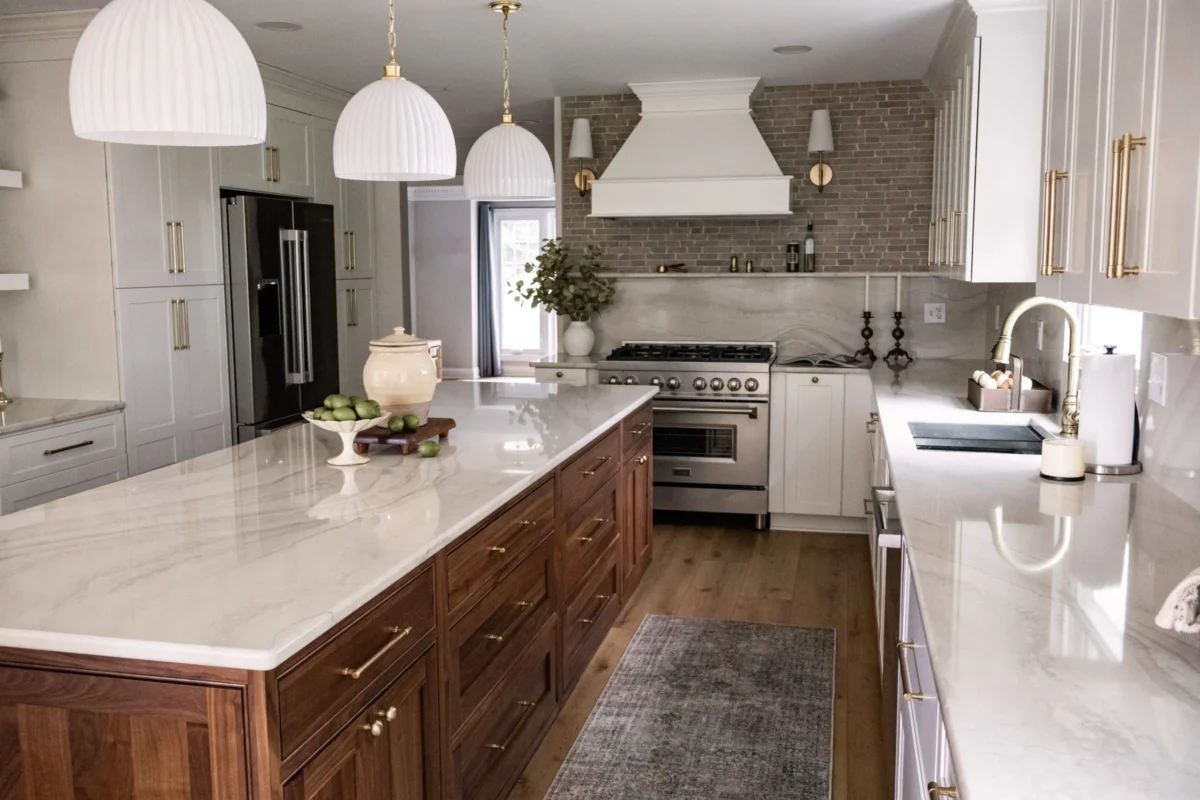
Quartz, by contrast, offers design versatility that can imitate various natural stones — from subtle veining that resembles marble to bold patterns reminiscent of granite. Because quartz is manufactured, it has consistent coloring and patterns, which can be helpful if you want a coordinated look throughout your kitchen.
The choice between butcher block and quartz often comes down to the overall style you’re trying to achieve. If your design leans toward rustic, farmhouse, or traditional aesthetics, butcher block can be a stunning focal point. If you prefer modern, sleek, or transitional designs, quartz offers a refined finish that elevates the space.
Which Countertop Should You Choose?
The right countertop material depends on how you use your kitchen, your design vision, and your maintenance preferences. Here’s a quick guide to help you decide:
- Choose Quartz if: you want a durable, low-maintenance surface with consistent design options and broad resale appeal. Quartz is ideal for high-traffic kitchens and busy families who favor ease of cleaning and long-lasting performance.
- Choose Butcher Block if: you love the natural warmth of wood, appreciate the evolving patina over time, and don’t mind occasional maintenance to keep it looking its best. Butcher block is perfect for homeowners who value texture, organic aesthetics, and hands-on kitchen material.
Final Thoughts
Butcher block and quartz kitchen countertops each offer unique advantages that appeal to different homeowners. Whether your priority is durability, visual warmth, or design versatility, understanding how these materials compare helps you make an informed decision. With the right guidance, you can create a kitchen that is not only beautiful but functional and tailored to how you live.
If you’re planning a kitchen remodel and want expert help selecting the right countertop, cabinetry, layout, and finishes, the team at Element Design Build Remodel is here to assist you every step of the way. Schedule a consultation today and let’s bring your dream kitchen to life.