When comparing butcher block vs granite kitchen countertops, the right choice depends on how you use your kitchen, how much maintenance you want to take on, and the look you want to achieve. But for many homeowners, both options come with tradeoffs that make quartz a more practical and reliable alternative for long term performance.
Below, we break down the differences between butcher block and granite, explain where each works best, and show why quartz countertops often provide the best balance of beauty, durability, and ease of care when remodeling your kitchen.
Understanding the Difference Between Butcher Block and Granite
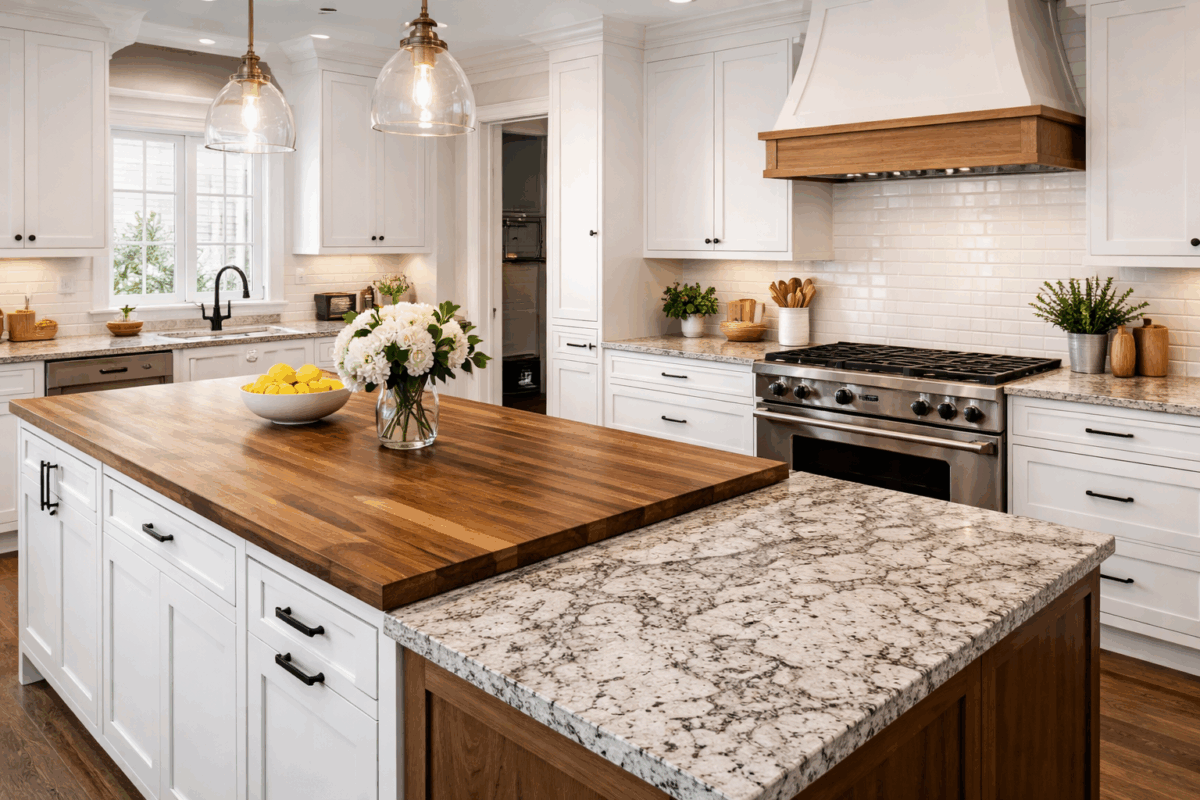
Butcher block and granite are very different materials, both in how they are made and how they perform in a kitchen.
Butcher block is made from strips of natural wood that are glued together to form a solid surface. Granite is a natural stone quarried from the earth and cut into slabs. Each brings a distinct look and feel, but also very different maintenance requirements.
Butcher Block Countertops
Butcher block countertops are known for their warmth and natural character. They are often chosen for farmhouse, cottage, or traditional kitchens where a softer, organic look is desired.
Pros of Butcher Block Countertops
- Warm, natural appearance that adds character
- Can be more affordable upfront than stone options
- Works well as an accent or island surface
- Can be sanded and refinished if damaged
Cons of Butcher Block Countertops
- Requires regular oiling to prevent drying and cracking
- Vulnerable to water damage and staining
- Can harbor bacteria if not properly maintained
- Susceptible to scratches, dents, and burn marks
- Not ideal for high moisture or heavy use kitchens
While butcher block can look beautiful, it demands ongoing care. Without consistent maintenance, it can warp, stain, or develop hygiene concerns over time.
Granite Countertops
Granite has long been a popular countertop choice because of its strength and natural beauty. Each slab is unique, which appeals to homeowners who want a one of a kind look.
Pros of Granite Countertops
- Durable natural stone
- Resistant to heat
- Distinct natural patterns
- Adds perceived value to a home
Cons of Granite Countertops
- Porous surface that requires sealing
- Can stain if spills are not cleaned quickly
- Pattern and color variation can be unpredictable
- Seams may be more noticeable
- Requires ongoing maintenance to preserve performance
Although granite is durable, it still needs regular sealing to protect against moisture and bacteria. Skipping maintenance can lead to staining or discoloration over time.
Comparing Butcher Block vs Granite Side by Side
When choosing between butcher block and granite countertops, homeowners often weigh appearance against upkeep. While both can work in the right setting, neither offers the low maintenance reliability many people want in a busy kitchen.
Here is how they compare at a high level:
- Maintenance: Butcher block requires frequent oiling. Granite requires sealing.
- Moisture resistance: Granite performs better than wood, but still absorbs moisture if unsealed.
- Durability: Granite is harder and more resistant to damage than butcher block.
- Hygiene: Both materials can harbor bacteria if not properly maintained.
- Consistency: Granite varies slab to slab. Butcher block color changes over time.
This is where many homeowners begin looking at quartz as an alternative that solves these limitations.
Why Quartz Is Often the Better Alternative to Both
Quartz countertops combine the visual appeal of natural materials with superior performance and minimal upkeep. For homeowners deciding between butcher block and granite, quartz often ends up being the most practical choice.
Benefits of Quartz Countertops
- Non porous surface that resists stains and bacteria
- No sealing or oiling required
- Highly durable and resistant to chips and scratches
- Consistent color and pattern
- Easy to clean with simple soap and water
- Wide range of design styles
Quartz delivers the reliability of engineered performance while still offering the look of stone or subtle natural texture.
Why Many Homeowners Choose Cambria Quartz
Cambria is a premium quartz brand known for quality, craftsmanship, and design innovation. It is often selected for kitchens where performance and aesthetics are equally important.
What Makes Cambria Stand Out
- Made in the USA with strict quality standards
- Non porous and food safe
- Designed to resist stains, scratches, and bacteria
- Wide range of sophisticated colors and patterns
- Backed by a transferable lifetime warranty
Cambria allows homeowners to enjoy the elegance associated with natural materials without the ongoing maintenance required by butcher block or granite.
Which Countertop Is Right for Your Kitchen?
Butcher block works best for homeowners who love natural wood and are willing to commit to regular upkeep. Granite can be a solid option for those who want natural stone and do not mind periodic sealing.
For most homeowners, however, quartz offers the best overall balance. It delivers durability, hygiene, design flexibility, and long term value in a way that both butcher block and granite struggle to match.
Get Expert Help Choosing the Right Countertop
Choosing the right countertop is about more than just materials. It is about how your kitchen functions, how you live day to day, and how long you want your investment to last.
At Element Design Build Remodel, we help homeowners compare countertop options side by side and select materials that fit their style, lifestyle, and long term goals. Whether you are exploring butcher block, granite, or quartz countertops like Cambria, our team can help you make a confident and informed decision. Schedule your free consultation today!