While both quartz and porcelain offer impressive performance, quartz is usually the better all-around choice for most bathrooms, delivering durability, easy care, and premium design versatility.
Porcelain, however, shines in niche scenarios – particularly where extreme heat, UV exposure, or ultra-thin, modern slab styles are the priority.
Choosing the right countertop material for a bathroom remodel requires balancing durability, maintenance, heat resistance, aesthetics, and overall project goals.
This article breaks down the strengths, limitations, and best-use cases of each material so you can make an informed decision that enhances both beauty and function in your bathroom.
Quick Comparison Table
| Feature | Quartz | Porcelain |
| Durability | Very durable; thick engineered slab resists scratches, chips, and daily impact | Extremely hard surface but thin panels can chip or crack more easily during fabrication/installation |
| Porosity & Stain Resistance | Non-porous; never needs sealing; highly stain-resistant | Non-porous; excellent stain resistance, though edge chips can expose underlying material |
| Heat Resistance | Handles normal bathroom temps; prolonged high heat can cause discoloration | Outstanding heat resistance; safe for hot tools and extreme temperatures |
| UV Resistance | Can discolor with prolonged UV exposure | Fully UV-stable; will not fade or yellow in sunlit bathrooms |
| Maintenance | Very low maintenance; simple cleaning, no sealing | Low maintenance after installation; careful handling needed during fabrication |
| Aesthetic Options | Deep patterns and realistic stone looks; wide range of veining, colors, and finishes | Ultra-thin modern slabs; printed designs; fewer edge profiles; ideal for minimal contemporary styles |
| Edge Profiles | Many options (eased, beveled, bullnose, ogee, waterfall) | Limited edge options due to thinness of slabs |
| Installation Complexity | Straightforward; thick slab is stable to fabricate | More complex; thin porcelain panels require highly skilled fabrication and can increase labor cost |
| Cost | Predictable cost; typically mid to high depending on brand and pattern | Slab cost may be competitive, but fabrication often costs more |
| Best Use Cases | Primary baths, kids’ baths, high-use family bathrooms, spa-style designs | Ultra-modern bathrooms, thin-slab designs, sun-drenched baths, heat-heavy spaces |
| Overall Practicality | Best all-around choice for most bathrooms | Excellent for niche modern applications or spaces with heavy heat/UV exposure |
Durability and Maintenance: Quartz Leads for Everyday Use
Quartz: Thick, Durable, and Low-Maintenance
Quartz is an engineered stone composed of natural quartz crystals, resins, and pigments. This manufacturing process results in a thick, non-porous, highly durable slab that performs exceptionally well in bathrooms.
Key advantages include:
- Scratch resistance: Quartz stands up to the daily wear of cosmetics, toothbrushes, jewelry, and other bathroom items.
- Chip resistance: The density of quartz makes it less prone to edge chipping than porcelain.
- Stain resistance: Quartz is non-porous, so it repels liquids and resists absorption of makeup, lotions, toothpaste, and cleaners.
- Zero sealing: Unlike natural stone, quartz never needs to be sealed.
- Easy cleaning: Simple soap-and-water or a gentle cleaner is typically enough.
For families, kids’ bathrooms, or high-use vanities, quartz offers a “worry-free” experience with minimal upkeep.
Porcelain: Hard, Dense, but Trickier During Fabrication
Porcelain slabs are extremely hard and dense, thanks to being fired at very high temperatures. While the material itself is durable, porcelain countertops are typically manufactured as thin, large-format panels, which introduces some challenges.
Key considerations:
- Fragile during fabrication/installation: Thin slabs are more vulnerable to cracking during cutting and transport.
- Chips/cracks are more visible: Repairs can be difficult and sometimes impossible to blend seamlessly.
- Lower thickness can reduce impact resistance: Heavy objects dropped on the surface may cause issues.
While porcelain performs well after installation, the process of getting it in place requires highly skilled fabricators and can increase cost and risk.
Heat, UV Exposure, and Bathroom Performance
Porcelain: Superior for Heat, Sunlight, and Extreme Conditions
One of the biggest advantages of porcelain over quartz is its ability to handle direct heat and strong UV exposure.
- Heat resistance: Hot tools like curling irons, flat irons, and blow dryers will not discolor or damage porcelain.
- UV stability: Porcelain will not fade or yellow from sunlight, making it ideal for bathrooms with large windows, skylights, or strong natural light.
- Thermal stability: Changes in temperature do not cause warping or discoloration.
If your bathroom receives intense sunlight or you frequently use hot styling tools directly on the counter, porcelain may offer a performance advantage.
Quartz: Great for Normal Bath Temps but Sensitive to High Heat
Quartz handles everyday bathroom temperatures extremely well but has one key limitation:
- Prolonged high heat can cause discoloration.
Direct heat from hot tools should not contact the surface for long periods. A simple heat mat or stand eliminates the risk, but this is important for households where teenagers or guests may place hot items directly on the countertop.
For most bathrooms, quartz performs perfectly – but for heavy heat exposure, porcelain has the edge.
Aesthetic Options, Edge Profiles, and Design Flexibility
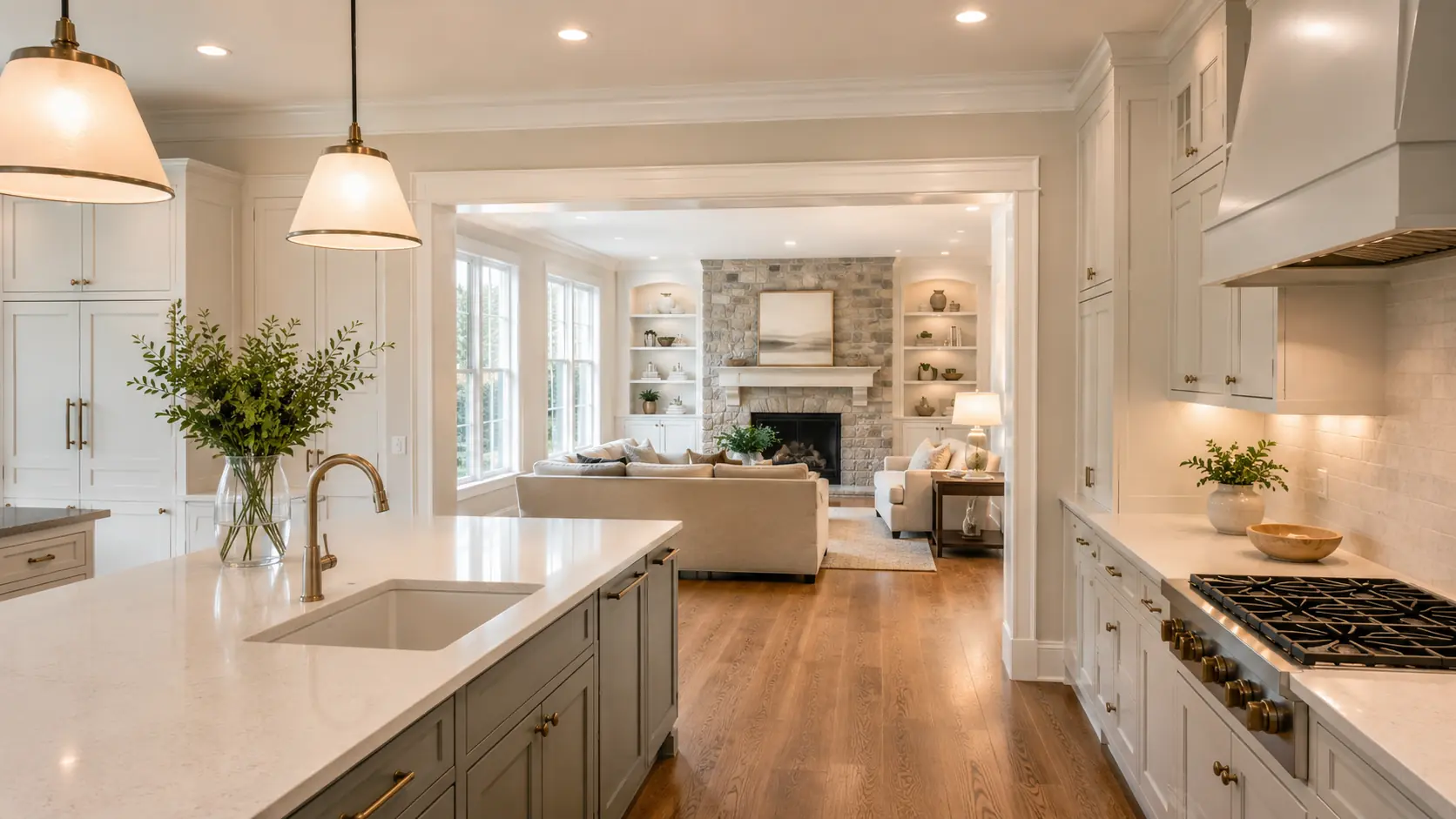
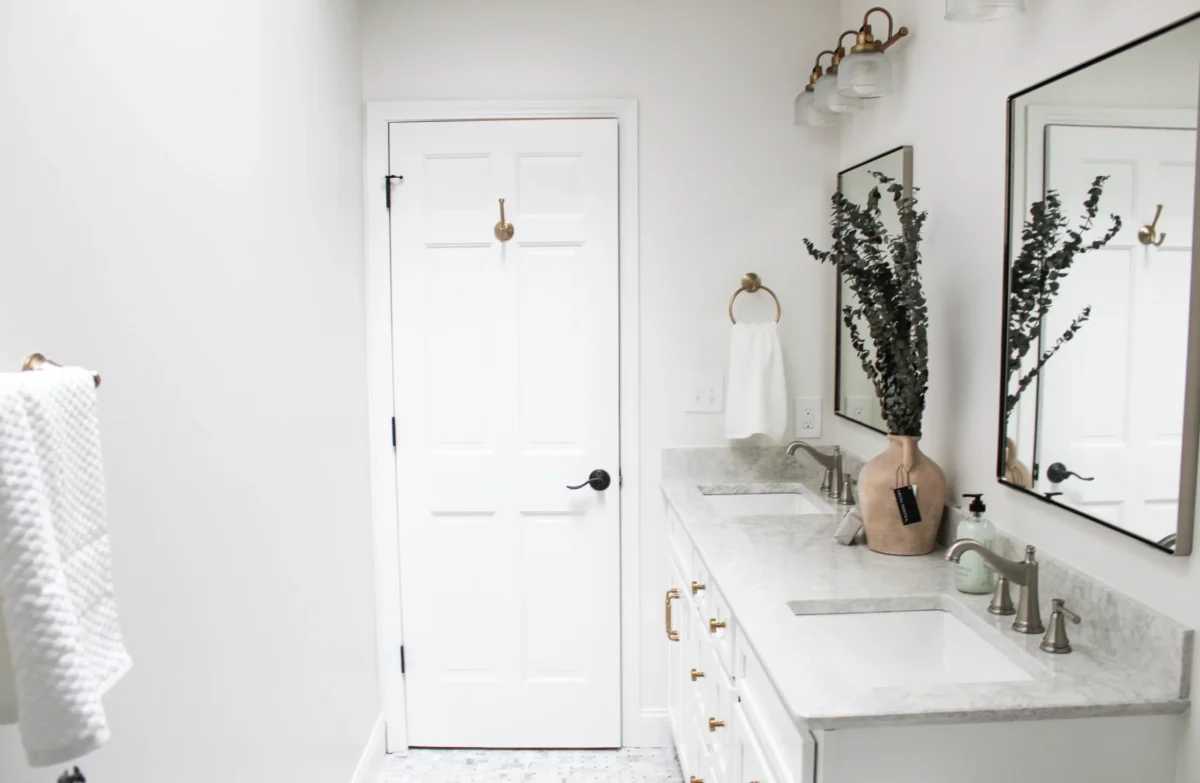
Quartz: Deep Patterns, Realistic Stone Looks, and Premium Finishes
One of the reasons quartz dominates modern bathroom design is its aesthetic versatility. Because it’s engineered, quartz can achieve:
- Deep, realistic veining (marble looks)
- Rich color patterns
- Consistent slabs
- Unique, textured finishes (honed, leathered, polished)
- Many edge profiles, including ogee, beveled, eased, bullnose, and waterfall edges
Quartz designs work exceptionally well in:
- Primary bathrooms
- Spa-style retreats
- Transitional or modern styles
- High-end remodels where realism and texture matter
For homeowners investing in a premium bathroom remodel, quartz often delivers the best combination of visual impact and maintenance ease.
Porcelain: Ultra-Thin, Modern Slabs With Printed Designs
Porcelain countertops often feature digitally printed designs – some extremely realistic – and come as very thin, large-format panels. This gives porcelain a unique aesthetic advantage:
- Ultra-thin, modern profiles
- Minimalist, sleek edges
- Large, seamless surfaces
- Ability to install over existing countertops
However, porcelain offers fewer edge options than quartz, and the printed patterns, while attractive, are often less deep or dimensional than engineered quartz veining.
Porcelain is ideal for:
- Ultra-modern bathrooms
- Floating vanities
- Large-format, seamless designs
- European-inspired styles
- Remodels where weight or thickness is a constraint
Cost Differences and What Impacts Pricing
Quartz: Consistent Cost Structure
Quartz pricing typically includes:
- Slab selection
- Fabrication
- Installation
- Edge profile
- Cutouts for sinks/faucets
Because quartz is thick, stable, and relatively straightforward to fabricate, labor costs are predictable. Pricing can range widely depending on brand, pattern complexity, and thickness, but fabrication is usually simpler than porcelain.
Porcelain: Material May Be Budget-Friendly but Fabrication Can Increase Cost
Porcelain slabs vary in price, and some can be cost-competitive with quartz. However:
- Fabrication is more specialized
- Labor costs can be higher
- Breakage or risk during installation may add to cost
- Limited edge options reduce design flexibility
Porcelain can sometimes end up more expensive overall, even when the slab itself costs less.
Practical Recommendations for Bathroom Countertops
When to Choose Quartz
Quartz is typically the best choice for:
- Primary bathrooms
- Kids’ bathrooms
- Family-use bathrooms
- High-traffic vanities
- Homeowners who want a premium look without high maintenance
- Those who prefer deep veining and realistic stone designs
- Remodels focused on long-term durability and convenience
Quartz delivers a “high-end but worry-free” outcome – ideal for most bathrooms.
When to Choose Porcelain
Porcelain is the right choice when:
- You want ultra-thin, modern countertop profiles
- Your bathroom receives strong UV exposure
- You frequently use hot tools directly on the counter
- You prefer the look of seamless, large-format slabs
- You are updating existing tops and want an overlay option
- You are designing a very modern or minimalist bathroom
For niche, design-forward bathrooms, porcelain offers advantages quartz cannot replicate.
Final Thoughts: Which Material Is Best for Your Bathroom?
Quartz is the top all-around choice for most bathroom countertops due to its durability, low maintenance, design variety, and user-friendly performance. Porcelain shines in specific applications – particularly modern designs requiring thin slabs, or bathrooms exposed to high heat or sunlight.
Your countertop material should reflect how the bathroom is used, the style you want to achieve, and the level of care you’re willing to maintain. With the right selection, both quartz and porcelain can elevate your bathroom’s functionality and beauty for years to come.
Transform Your Bathroom With Element
Whether you’re leaning toward the durability of quartz or the modern elegance of porcelain, Element delivers expert design guidance, flawless fabrication, and premium installation. Our team helps you evaluate the right material for your space, lifestyle, and long-term goals – ensuring a stunning, functional bathroom you’ll love.
Contact Element today to start planning your next bathroom remodel.