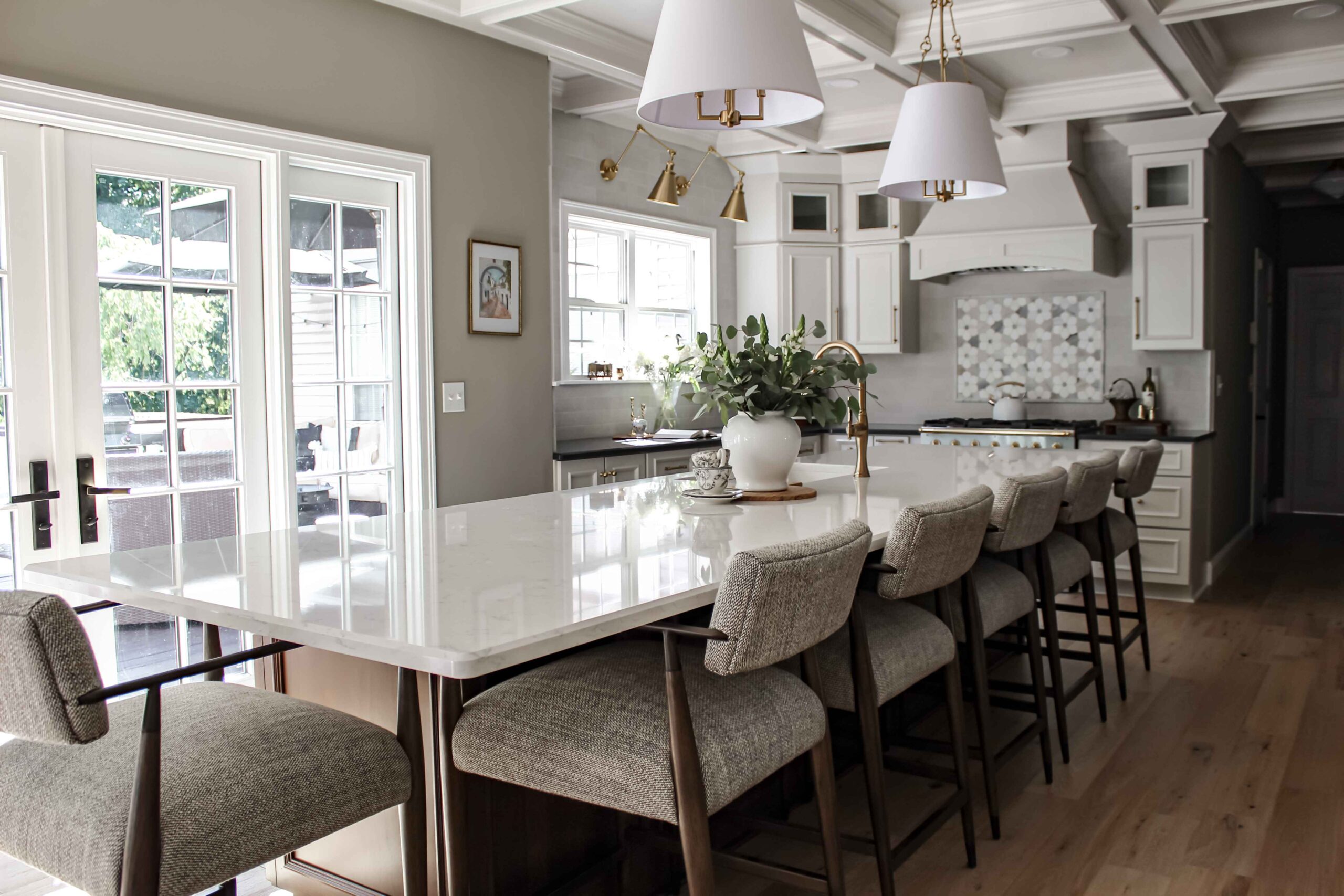
In general, quartzite countertops are prized for their marble-like beauty and exceptional hardness, while granite countertops are valued for their durability, heat resistance, and wide range of natural patterns. Choosing between quartzite and granite isn’t about which stone is objectively better.
Both materials are natural stone, both are strong performers, and both can elevate the look of a kitchen. However, they differ meaningfully in appearance, maintenance requirements, stain resistance, and overall feel. Understanding these differences will help you choose a countertop that performs well long after your remodel is complete.
| Feature | Quartzite Countertops | Granite Countertops |
| Overall best for | Homeowners who want a marble-like look with extreme hardness | Homeowners who want classic natural stone with proven performance |
| Material type | Natural metamorphic stone (formed from sandstone) | Natural igneous stone (formed from cooled magma) |
| Appearance | Light, elegant veining; often resembles marble | Speckled or patterned with visible mineral variation |
| Color range | Mostly whites, creams, grays, soft neutrals | Wide range including whites, grays, blacks, blues, browns |
| Uniqueness | Each slab is unique | Each slab is unique |
| Hardness | Extremely hard; harder than granite | Very hard and durable |
| Scratch resistance | Excellent | Excellent |
| Heat resistance | Excellent; handles hot cookware well | Excellent; very heat tolerant |
| Porosity | Porous | Porous |
| Sealing required | Yes; periodic sealing needed | Yes; typically sealed about once per year |
| Stain resistance | Good when sealed; wipe spills promptly | Good when sealed; oils can stain if left |
| Daily maintenance | Mild soap and water | Mild soap and water |
| Etching risk | Low, but possible with acidic spills | Very low |
| Fabrication difficulty | Higher due to stone hardness | Moderate |
| Typical cost range | Mid-to-high range | Wide range; common colors often lower |
| Long-term care cost | Moderate (sealing maintenance) | Moderate (sealing maintenance) |
| Design style fit | Modern, transitional, luxury kitchens | Traditional, transitional, rustic kitchens |
Understanding the Difference Between Quartzite and Granite
Although quartzite and granite are often discussed together, they are formed in very different ways.
Quartzite is a metamorphic stone that begins as sandstone and is transformed under intense heat and pressure. This process fuses the quartz crystals together, creating an extremely hard and dense stone. True quartzite is composed almost entirely of quartz, which contributes to its strength and durability.
Granite is an igneous rock formed as molten magma cools beneath the Earth’s surface. It contains a mix of minerals such as quartz, feldspar, and mica, which give granite its signature speckled appearance and varied coloration.
Both stones are quarried, cut into slabs, and polished, but their geological origins lead to different performance characteristics in the kitchen.
Appearance and Design Impact
Aesthetics are often the deciding factor when comparing quartzite and granite.
Quartzite is known for its elegant, high-end appearance. Many quartzite slabs resemble marble, featuring soft veining, subtle movement, and light, airy coloration. Whites, creams, and pale grays are especially popular, making quartzite a favorite for homeowners seeking a refined or timeless kitchen design. While quartzite can also come in bolder hues, its overall look tends to be more linear and flowing.
Granite offers a broader range of visual variety. Some slabs are subtle and uniform, while others feature dramatic mineral movement, flecks, and color variation. Granite can work beautifully in traditional, transitional, and rustic kitchens, and its natural depth often adds warmth and texture to a space.
For homeowners who want a clean, marble-inspired look without choosing actual marble, quartzite is often the preferred option. Those who want bold character and unmistakable natural stone presence may lean toward granite.
Durability and Daily Wear
Both quartzite and granite are extremely durable, but quartzite has a slight edge in hardness.
Quartzite is one of the hardest natural stones used in residential kitchens. It is highly resistant to scratches and stands up well to heavy daily use. Cutting directly on the surface is still not recommended, but accidental contact with knives or cookware is unlikely to cause damage.
Granite is also very strong and performs well under normal kitchen conditions. It resists scratches, chips, and cracks when properly fabricated and installed. In real-world use, most homeowners will find both materials more than capable of handling everyday wear and tear.
For busy kitchens, either stone is a solid choice, but quartzite’s exceptional hardness can provide extra reassurance for high-traffic households.
Porosity, Staining, and Maintenance
One of the most important differences between quartzite and granite is how they handle moisture and staining.
Quartzite is naturally dense, but it is still a porous stone. To protect it from absorbing liquids, it must be sealed regularly. When properly sealed, quartzite resists stains well, but acidic substances like wine, citrus juice, or vinegar should still be wiped up promptly to avoid potential discoloration.
Granite is also porous and requires sealing to perform at its best. Depending on the specific slab and how heavily the kitchen is used, granite typically needs to be sealed about once a year. Without proper sealing, granite can absorb oils and dark liquids, leading to stains over time.
In terms of daily maintenance, both materials are relatively easy to care for. Mild soap and water are usually sufficient for cleaning, and harsh chemicals should be avoided. Neither material is maintenance-free, but both reward routine care with long-term durability.
Homeowners who prefer a “set it and forget it” surface may find quartzite slightly more demanding than expected, especially compared to engineered materials. That said, many find the upkeep worthwhile for the visual payoff.
Heat Resistance and Cooking Habits
Heat resistance is an area where both quartzite and granite perform exceptionally well.
Granite is well-known for its ability to tolerate high temperatures. Hot pots and pans can usually be placed directly on the surface without causing damage, although using trivets is still recommended as a best practice.
Quartzite performs similarly and is highly heat-resistant due to its natural formation under extreme conditions. It can handle hot cookware better than many other countertop materials and is unlikely to scorch or crack from typical kitchen use.
For homeowners who cook frequently or use high heat, both materials offer confidence and flexibility, making them excellent choices for serious cooks.
Consistency vs. Natural Variation
Because both quartzite and granite are natural stones, no two slabs are exactly alike.
Quartzite tends to have a more consistent, flowing appearance, especially in lighter varieties. However, veining and color can vary significantly from slab to slab, making slab selection an important part of the design process.
Granite often displays more visible variation, including flecks, speckles, and mineral deposits. Some homeowners love this organic randomness, while others find it harder to coordinate with cabinetry and backsplashes.
Working with an experienced design-build team allows homeowners to view full slabs and select the one that best fits their vision, regardless of which stone they choose.
Cost Expectations and Long-Term Value
Quartzite and granite occupy similar price ranges, but quartzite often sits slightly higher.
Granite pricing varies widely. Common colors and locally available slabs can be very cost-effective, while rare or exotic granites can be quite expensive. This wide range makes granite accessible for many budgets.
Quartzite is generally considered a premium material. Its popularity, limited availability of certain colors, and visual similarity to marble often push it into a higher price bracket. Installation costs can also be higher due to the stone’s hardness, which requires specialized fabrication tools.
In terms of long-term value, both materials can last for decades when properly maintained. Quartzite may command a higher upfront investment, but many homeowners feel its aesthetic impact justifies the cost.
How Each Stone Performs in Real Kitchens
In everyday use, quartzite appeals to homeowners who want a light, elegant kitchen that still functions like a workhorse. It delivers visual sophistication without sacrificing durability, making it a strong choice for open-concept kitchens where countertops are always on display.
Granite excels in kitchens where warmth, character, and individuality matter most. It feels solid, timeless, and forgiving, especially for households that cook frequently and value practicality alongside beauty.
Some homeowners even mix materials, using quartzite on islands for visual impact and granite on perimeter counters for cost efficiency and visual balance.
Quartzite vs Granite: Which One Is Right for You?
Quartzite is the better choice if you love a marble-like appearance, want exceptional hardness, and are comfortable with periodic sealing to maintain its beauty. It suits homeowners who prioritize elegance and want a natural stone that feels refined yet durable.
Granite is the better choice if you want a wide range of colors, excellent heat resistance, and a natural stone surface that delivers proven performance at a variety of price points. It’s ideal for homeowners who appreciate organic variation and a more traditional stone aesthetic.
Final Thoughts from Element Design Build Remodel
At Element Design Build Remodel, helping homeowners navigate these decisions is part of creating kitchens that are not only beautiful, but functional for years to come. By aligning the material with your lifestyle rather than just its appearance, you’ll end up with a countertop that truly supports the way you live. Contact us today to get started!