Choosing the right flooring for a bathroom remodel is one of the most important decisions homeowners make – especially when moisture, longevity, comfort, and resale value are on the line.
Luxury vinyl plank (LVP) performs well in many bathrooms thanks to its water resistance, comfort, and affordability, but tile remains the gold standard for durability, moisture management, and long-term value.
This article breaks down when tile is the superior choice, when LVP makes sense, the key cautions to consider, and the most practical recommendations for mid- to upper-tier bathroom remodels.
Quick Comparison Table
| Feature | LVP (Luxury Vinyl Plank) | Porcelain/Ceramic Tile |
| Moisture Resistance | Highly water-resistant but not fully waterproof if moisture seeps underneath | Excellent; when paired with proper waterproofing, handles standing water and steam |
| Durability | Good, but can scratch, gouge, or dent; softer surface | Superior; extremely hard, scratch- and dent-resistant |
| Lifespan | 10 – 20 years in a busy bathroom | 30 – 40+ years with proper installation and maintenance |
| Comfort Underfoot | Softer, warmer, more forgiving | Harder and colder unless radiant heat is added |
| Installation Cost | Lower material and labor costs; faster installation | Higher material and labor costs; more prep and time required |
| Installation Over Imperfect Subfloors | More forgiving; minimal leveling needed | Needs a flat, properly prepared subfloor |
| Maintenance | Easy; no grout lines; simple sweeping and mopping | Moderate; grout may require cleaning and periodic sealing |
| Aesthetic/Design Impact | Realistic wood/stone looks; stylish but less premium | Considered high-end; broad design options including large-format and textured tiles |
| Best Settings | Secondary baths, guest baths, powder rooms, budget-conscious remodels | Primary baths, luxury remodels, high-moisture spaces, long-term homes |
| Resale Value | Good, but considered a mid-tier finish | Higher resale impact; viewed as a premium, permanent upgrade |
| Comfort Enhancements | Naturally warm underfoot | Can be paired with electric radiant heat for superior comfort |
| Risk Factors | Water intrusion beneath planks can cause swelling or mold | Cracked tiles possible if subfloor is unstable but generally low-risk |
When Tile Is the Better Bathroom Flooring
Superior Performance in High-Moisture Environments
Bathrooms experience some of the harshest moisture conditions in the entire home – from long, steamy showers to splashing, spills, and puddles. In spaces with poor ventilation, heavy daily use, or multiple occupants (such as kids’ baths), properly installed porcelain or ceramic tile stands up far better over time.
Tile’s dense structure and the ability to integrate comprehensive waterproofing systems (such as membranes, cement board, and sealed grout) make it ideal for handling standing water, condensation, and humidity. When installed correctly, tile assemblies protect both the surface and subfloor for decades, minimizing the risk of swelling, delamination, or hidden moisture issues.
Durability and Lifespan That Outlasts LVP
Tile remains unmatched when it comes to long-term durability. Porcelain and ceramic tile resist scratches, dents, impacts, and wear far more effectively than LVP. While LVP is tough and highly water-resistant, it is still a softer material that can be gouged by sharp objects, dragged furniture, or dropped items.
Tile flooring, especially porcelain, can comfortably last 30 – 40 years or longer with basic maintenance. By comparison, LVP in a busy bathroom typically lasts 10 – 20 years before showing signs of wear, movement, or edge degradation.
Higher Resale Value and Elevated Aesthetic
For homeowners planning a mid- to upper-tier renovation or a project valued at $60,000 or more, tile still signals a premium, permanent finish. Buyers consistently view tile as a higher-end, more desirable choice in a bathroom – especially when paired with upgrades like heated floors or modern large-format patterns.
LVP can look beautiful and perform well, but in the eyes of both appraisers and prospective buyers, tile remains the more upscale material and can contribute to stronger resale appeal.
When LVP Makes Sense in a Bathroom
Warmth and Comfort Underfoot
One of the biggest homeowner complaints about tile is its cold feel – particularly during the winter months. Unless radiant heat is added, tile remains cool to the touch, which may be a drawback for clients who prioritize comfort.
LVP, however, naturally feels softer, warmer, and more forgiving underfoot. This can be a welcome feature in bathrooms where comfort matters, or in situations where radiant heating is not being added to the renovation.
Budget-Friendly and Faster Installation
Material and labor costs for LVP are significantly lower than tile, making it an excellent fit for budget-sensitive projects, secondary bathrooms, guest baths, or quick updates.
LVP can also be more forgiving over imperfect subfloors. With tile, any irregularities must be corrected before installation, which can add time and expense. LVP’s floating or glue-down systems allow for efficient installation without extensive subfloor correction.
Low Maintenance and Easy Cleaning
Another advantage of LVP is its low-maintenance profile. Unlike tile, LVP has no grout lines to seal, scrub, or maintain. Routine sweeping and mopping are usually sufficient.
Tile, although extremely durable, does require periodic grout cleaning, resealing (depending on grout type), and occasional repairs to maintain its appearance.
Key Cautions When Using LVP in Bathrooms
Water Intrusion Risks in Certain Conditions
While LVP is highly water-resistant – and in many cases marketed as waterproof – it is not immune to moisture problems if water gets underneath the planks.
Chronic moisture exposure from leaks, puddles, condensation, or unaddressed plumbing issues can cause:
- Swelling or warping
- Plank movement
- Trapped moisture beneath the floor
- Mold or mildew in the subfloor
To avoid these issues, proper substrate preparation, gap sealing, and room detailing are essential. LVP should never be installed in a bathroom with existing moisture problems, an unvented shower, or poorly controlled humidity.
Shorter Lifespan Compared to Tile
Homeowners considering LVP for a bathroom should plan on a 10 – 20 year usable lifespan, especially in high-traffic areas. Over time, edges may lift, patterns may wear, or the material may lose some of its rigidity.
By contrast, a professionally installed tile floor can often exceed 30 – 40 years with minimal trouble.
Practical Recommendations for Your Bathroom Remodel
For High-End or Major Bathroom Renovations ($60K+)
For premium remodels or additions where quality, longevity, and resale value matter, tile is the best choice for both floors and wet zones.
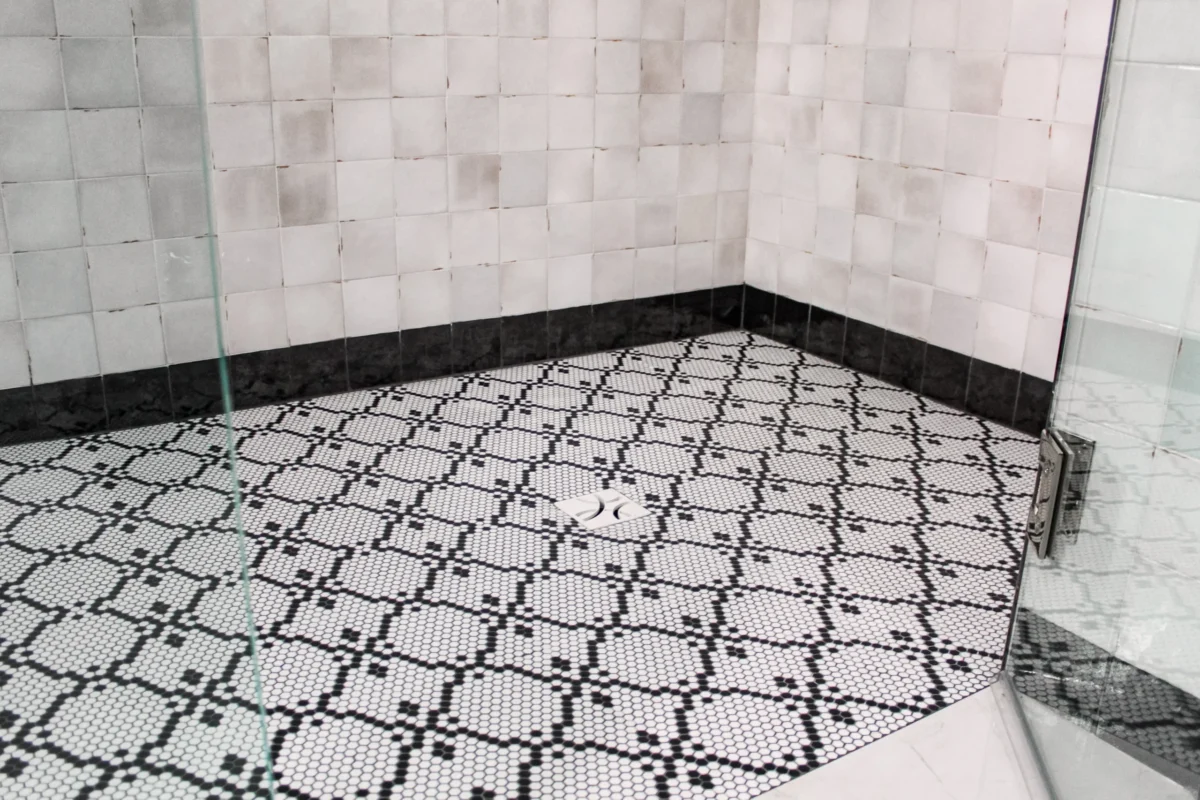
Pairing porcelain or ceramic tile with a waterproofing system (such as Schluter or similar) ensures long-term durability. In higher-budget projects, consider adding electric radiant heat under the tile to eliminate the “cold floor” issue and create a luxurious spa-like feel.
For Secondary Baths, Guest Baths, and Cost-Sensitive Projects
LVP is a practical, attractive choice for bathrooms where:
- Budget is a higher priority
- Comfort and warmth matter
- The bathroom sees moderate, not heavy, moisture exposure
- The renovation scope is more modest
Powder rooms, guest baths, and light-use bathrooms are ideal environments for LVP. It delivers excellent value without compromising on style.
For Long-Term Homes vs. Rental Properties
If you are renovating to stay long-term – or to appeal to higher-end buyers – tile is the more strategic investment.
If you are renovating a rental property or need a cost-effective option with simple maintenance, LVP can be a smart choice, provided moisture conditions are well managed.
Final Thoughts: Choosing the Right Floor for Your Bathroom
Both LVP and tile offer compelling benefits in bathroom environments, but the right choice depends on your project scope, use-case, moisture levels, budget, and long-term goals. Tile remains the most reliable and value-driven solution for high-moisture or premium remodels, while LVP provides comfort and cost-efficiency for lighter-use bathrooms.
Whether you’re planning a premium spa-style renovation or a budget-friendly update, Element delivers thoughtful design, expert installation, and materials that stand the test of time. Our team will guide you toward the right flooring choice – and every other detail – to create a bathroom that’s beautiful, functional, and built to last.
Contact Element today to start planning your next bathroom remodel.