Choosing the right countertop material is one of the most important decisions in a bathroom remodel. The surface must perform well against moisture, cosmetics, daily wear, and cleaning products – yet also deliver the aesthetic impact homeowners want.
For most bathrooms, granite is the more practical and low-maintenance choice, while marble is ideal when your top priority is achieving a luxurious, timeless look and you’re willing to accept more care and risk.
This article breaks down durability, maintenance needs, costs, value, appearance, and best use cases to help you make a confident, informed decision.
Quick Comparison Table
| Feature | Granite | Marble |
| Durability | Very durable; highly scratch- and chip-resistant | Softer; more prone to scratches, chips, and surface wear |
| Stain Resistance | More stain-resistant when sealed; handles cosmetics and daily products well | More porous and prone to staining from toothpaste, makeup, and skincare acids |
| Etching Resistance | Resistant to etching from common bathroom products | Easily etched by acidic products (retinol, toothpaste, perfumes, cleansers) |
| Heat Resistance | Very heat-resistant; safe for hot styling tools | Heat-resistant but can discolor or etch with prolonged exposure |
| Maintenance Needs | Low maintenance; periodic sealing | Higher maintenance; requires more frequent sealing and gentle cleaning |
| Appearance | Speckled, varied patterns; wide range of dark and bold colors | Timeless veining and soft, elegant patterns; classic luxury look |
| Typical Cost | Often slightly less expensive; overlapping price ranges with marble | Often slightly higher; premium varieties command higher prices |
| Best Uses | Kids’ baths, family baths, rentals, high-use spaces | Primary suites, luxury baths, showpiece powder rooms |
| Longevity | Extremely long-lasting in high-use environments | Long-lasting with proper care but shows wear faster |
| Resale Appeal | Viewed as durable and low-maintenance; broad buyer appeal | Viewed as high-end and luxury; appeals to design-focused buyers |
| Overall Practicality | Most practical choice for everyday bathroom use | Best choice when aesthetics matter more than maintenance |
Durability and Maintenance: Granite’s Practical Strength vs. Marble’s Delicate Beauty
Granite: Harder, More Resilient, and Easier to Maintain
Granite is one of the most durable natural stone options available for bathroom countertops. Its mineral composition and dense structure make it highly resistant to scratches, stains, heat, and general wear.
In bathrooms – where cosmetics, toothpaste, lotions, dyes, and hot styling tools frequently come into contact with the counter – granite stands up exceptionally well. It is far less likely to show etching or dull spots from everyday products, making it ideal for:
- Kids’ bathrooms
- Family-use bathrooms
- High-traffic vanities
- Guest bathrooms
- Rental properties and investment homes
With proper sealing (usually once a year, depending on the stone and sealer used), granite remains easy to clean and maintain. Most spills wipe off without leaving marks, and the surface retains its finish even under heavy daily use.
Marble: Stunning but Softer, More Porous, and Higher Maintenance
Marble is cherished for its elegant veining and classic luxury appearance, but it requires significantly more care – especially in a bathroom setting. Because marble is softer and more porous than granite, it is more vulnerable to:
- Scratches
- Staining
- Etching from household acids
- Dulling from harsh cleaners or skincare products
Common bathroom items like toothpaste, hair dye, retinol serums, nail polish remover, perfumes, and cleansers can quickly etch or stain an unprotected marble surface. Even with regular sealing, marble remains more sensitive than granite.
Marble is best suited for homeowners who:
- Prioritize its iconic beauty above all
- Are comfortable with periodic resealing
- Don’t mind patina or natural aging
- Have bathrooms with light, careful use
For this reason, marble is often installed in master suites, luxury primary baths, and showpiece powder rooms rather than high-wear family bathrooms.
Cost and Value: Overlapping Price Ranges With Different Perceived Benefits
Pricing Differences Between Granite and Marble
While both materials can overlap in cost, granite is typically less expensive on average, especially for widely available varieties. Specialty, exotic, or rare slabs can increase the price, but most homeowners find granite to be a cost-effective option that still delivers natural beauty and long-term reliability.
Marble, on the other hand, tends to command a premium – particularly for iconic varieties such as Carrara, Calacatta, or Statuario. These stones are prized for their dramatic veining and soft, classic appearance, which raises their market value.
Resale Value: Granite for Practical Buyers, Marble for Luxury Enthusiasts
For potential homebuyers, both granite and marble read as authentic, high-value natural stone. However, their perceived benefits differ:
Granite & Quartz
- Seen as durable, worry-free, and family-friendly
- Appeal to buyers who want long-term reliability
- Require less maintenance and are more forgiving
Marble
- Signals premium, high-end design
- Attracts buyers who value aesthetics over convenience
- Carries prestige and sophistication
If selling your home is on the horizon and durability is a priority, granite (or quartz) may deliver broader appeal. If you’re designing a luxury bathroom intended to impress, marble’s aesthetic impact can elevate the space significantly.
Appearance and Design Style: Timeless Marble vs. Versatile Granite
Marble: Elegant, Veined, and Classic
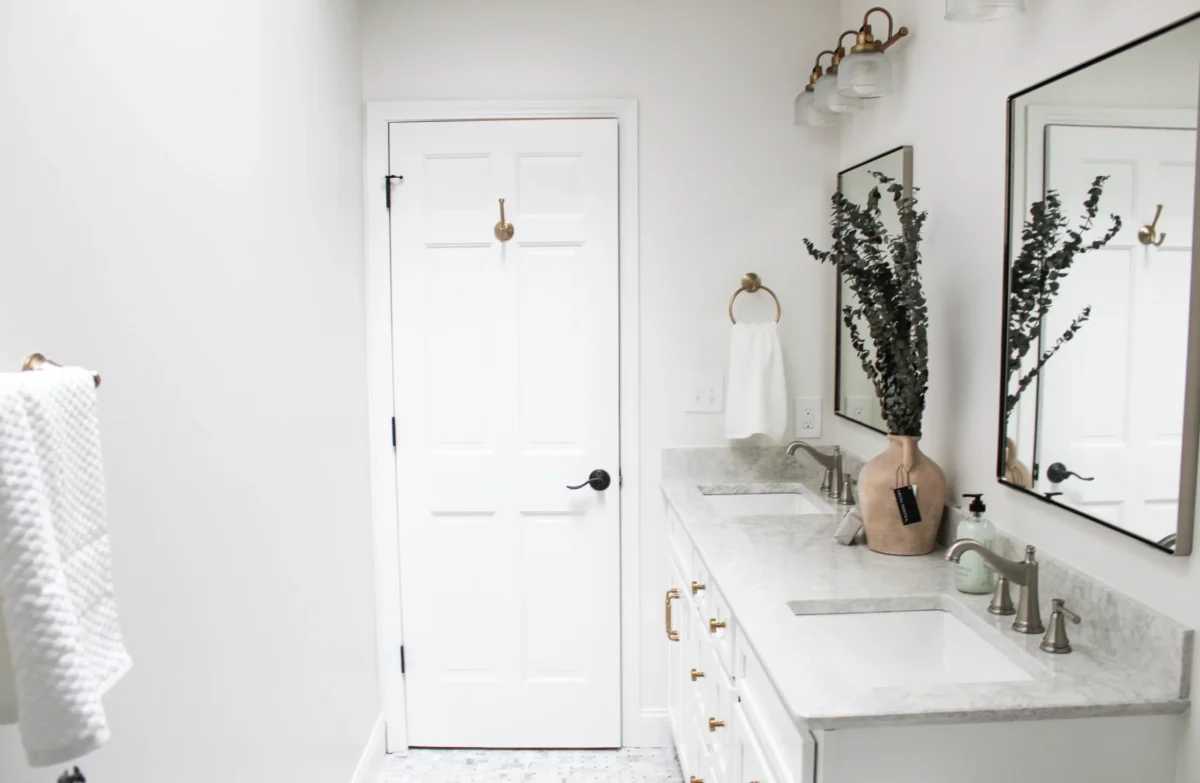
Marble is often associated with luxury hotels, spas, and upscale bathrooms. Its soft movement and natural veining create an instantly sophisticated look. Marble pairs beautifully with:
- Traditional and transitional bathrooms
- Light, airy color palettes
- Spa-inspired designs
- High-end master suites
- Showpiece powder rooms
Because marble is lighter in color and pattern, it contributes to an elevated, serene atmosphere – ideal for bathrooms meant to feel relaxing and indulgent.
Granite: Bold, Varied, and Durable
Granite offers a more diverse range of patterns, including:
- Speckled
- Mottled
- Veined
- Multi-tone
- Bold, dramatic colors
This variety makes granite versatile across many design styles, from modern to rustic to classic. Because its patterns often hide small stains or dust better than marble, granite is a practical option for busy bathrooms and homes with children.
Granite complements:
- Family bathrooms
- Contemporary and modern spaces
- Color-rich palettes
- High-use vanities
- Rentals and investment properties
Best Use Cases for Granite and Marble in Bathroom Remodels
When Granite Is the Best Choice
For high-use bathrooms – especially in homes where humidity and daily wear are considerations – granite excels. It’s the recommended material for:
- Kids’ bathrooms
- Family bathrooms
- Guest bathrooms
- Rental property vanities
- Any vanity exposed to cosmetics, toothpaste, or hair tools
- Homeowners who want low-maintenance natural stone
Its scratch resistance, stain resistance, and overall toughness make it a reliable, cost-effective option.
When Marble Is the Best Choice
Marble shines in spaces where design and aesthetics are the top priority. It’s ideal for:
- Master suites
- Luxury primary bathrooms
- Showpiece powder rooms
- Spa-inspired retreats
- Clients who want a timeless, high-end look
- Bathrooms with more controlled, light use
In high-end remodels – especially those exceeding $60K – marble is often used strategically to create impact while granite or quartz handles the more demanding spaces.
Practical Recommendation for Homeowners
For most mid- to high-end bathroom remodels, a balanced approach works best:
- Use granite (or quartz) for family baths, kids’ baths, and any high-use vanity.
Granite delivers durability and low-maintenance performance where it matters most. - Reserve marble for primary suites, luxury retreats, or powder rooms where it can be showcased and cared for properly.
This gives homeowners the elegance of marble without taking on unnecessary risk in high-traffic areas.
This strategy maximizes both longevity and visual impact across the home.
Final Thoughts: Granite vs. Marble for Bathroom Countertops
Both granite and marble bring natural beauty and lasting value to a bathroom, but their performance characteristics differ significantly. Granite offers a more durable, family-friendly option that thrives in heavy-use spaces, while marble provides unmatched elegance and sophistication for homeowners willing to accept ongoing maintenance.
Your choice ultimately depends on your lifestyle, aesthetic priorities, and how the bathroom will be used. Understanding the strengths of each material ensures the final result aligns with both your design vision and practical needs.
Whether you’re choosing durable granite for a family bathroom or luxurious marble for a primary suite, Element helps you design, select, and install surfaces that elevate your space. Our expert team provides guidance on materials, layout, and craftsmanship to ensure your bathroom achieves the perfect balance of beauty and performance.
Contact Element today to begin your bathroom transformation.