Home additions are a popular way for homeowners in Portage County, Ohio to gain more living space without moving to a new house. Whether the goal is to add a larger kitchen, a new family room, a primary suite, or even a second story, home additions allow homeowners to customize their home to fit their lifestyle. However, expanding a house involves more than just construction. Before work can begin, homeowners must understand the permit requirements that apply to residential additions.
In Portage County, home additions almost always require permits because they involve structural construction, electrical systems, plumbing, and other components regulated by building codes. These requirements exist to ensure additions are safe, properly designed, and built to meet the Ohio Residential Code. Understanding the permit process can help homeowners plan their project more effectively and avoid delays during construction.
Why Home Addition Permits Are Required
Building permits exist to ensure that construction projects follow safety standards and local building codes. When a homeowner applies for a permit, the local building department reviews the construction plans to make sure the addition meets structural, electrical, plumbing, and zoning requirements.
Once a permit is issued, inspectors review the project at different stages of construction. These inspections verify that the foundation, framing, electrical systems, and other components are installed correctly and according to code.
For homeowners, permits provide important protection. They help ensure that the new addition is structurally sound, safe to occupy, and legally documented. Permits also create an official record that the work was inspected and approved by the local building authority.
What Types of Home Additions Require Permits
In Portage County, nearly all home additions require building permits because they involve expanding the structure of the home. Any project that adds square footage or changes the footprint of the house must go through the permit process before construction begins.
Common home additions that require permits include room additions such as bedrooms, living rooms, and family rooms. Kitchen expansions, sunrooms, enclosed porches, and primary suite additions also require permits. Second-story additions and garage additions are considered major structural projects and require full plan review and inspections.
Even smaller additions, such as bump-outs that extend an existing room, require permits because they involve structural framing, roofing, and foundation work.
Because these projects change the structure of the home, building departments must review the design to ensure it meets code requirements.
Structural Plans and Design Requirements
One of the first steps in the permit process is submitting construction plans that show how the addition will be built. These plans typically include detailed drawings that show the layout of the addition, foundation design, framing structure, roof design, and connections to the existing home.
The building department reviews these plans to confirm that the addition meets structural standards established by the Ohio Residential Code. In some cases, structural calculations or engineering documentation may be required, particularly for larger additions or second-story expansions.
The goal of this review process is to ensure the new structure can safely support its weight and integrate properly with the existing home.
Foundation Requirements for Additions
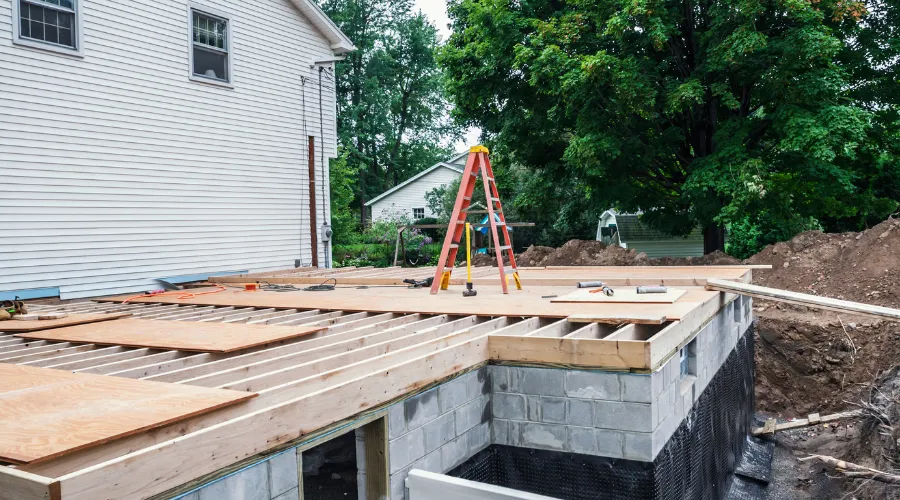
A strong foundation is essential for any home addition. Foundations support the weight of the new structure and help prevent settling, shifting, or structural damage over time.
In Northeast Ohio, foundations must extend below the frost line to prevent movement caused by freezing and thawing during the winter months. In most parts of Portage County, this means foundations typically need to extend at least three feet below ground level.
Common foundation types for home additions include poured concrete foundations, concrete block foundations, and slab-on-grade foundations depending on the design of the addition.
During construction, inspectors will review the foundation before concrete is poured to ensure the depth, reinforcement, and layout meet code requirements.
Zoning Regulations and Setback Requirements
In addition to building codes, homeowners must also comply with zoning regulations before building an addition. Zoning rules determine where additions can be built on a property and how large they can be.
Local zoning codes regulate setbacks, which are the required distances between a structure and property lines. They may also limit the total percentage of a lot that can be covered by buildings.
Before issuing a permit, the building department reviews the proposed addition to ensure it complies with zoning regulations for the specific property.
This step helps maintain consistent neighborhood development and ensures homes are built with adequate space between structures.
The Inspection Process for Home Additions
After the permit is approved and construction begins, inspectors visit the property at different stages of the project to verify that the work meets building codes.
Typical inspections for a home addition include a foundation inspection, which occurs before concrete is poured. A framing inspection follows once the structure of the addition is built but before walls are closed.
Electrical and plumbing inspections occur after the rough systems are installed but before drywall is installed. Finally, a final inspection confirms that the entire addition meets building codes and matches the approved plans.
Passing these inspections is required before moving on to the next stage of construction.
Risks of Building an Addition Without a Permit
Attempting to build a home addition without permits can lead to serious problems for homeowners. If unpermitted construction is discovered, the building department may issue a stop-work order until the situation is resolved.
Homeowners may also face fines or be required to remove portions of the addition so inspectors can verify the construction. In some cases, improperly built additions must be partially rebuilt to meet code requirements.
Unpermitted additions can also create complications when selling a home. Buyers and lenders often require proof that additions were permitted and inspected by the appropriate authorities.
For these reasons, following the proper permit process is essential for protecting both the homeowner and the property.
How Element Design and Build Helps Homeowners Navigate Permits
Understanding permit requirements and building codes can be overwhelming for homeowners planning a home addition. This is why many homeowners choose to work with experienced design-build contractors.
Element Design and Build helps homeowners throughout Portage County plan and complete home additions while managing the permit process from start to finish.
During the design phase, the team develops detailed plans that meet structural and zoning requirements. These plans are submitted to the appropriate building department for review and approval.
Element Design and Build also coordinates inspections throughout construction to ensure the project passes each stage of the process.
By managing both the design and construction aspects of the project, the company helps homeowners avoid delays and ensures the addition is built safely and legally.
Ready to Start Your Home Remodeling Project?
Whether you’re expanding your home, updating an outdated space, or starting a full renovation, Element Design and Build can help bring your vision to life.
Unlike standard contractors who make you pull your own permits or hire a separate architect, Element Design Build Remodel handles the architectural drawings, engineering requirements, and county paperwork entirely in-house.
Contact Element Design and Build today to schedule a consultation and start planning a remodeling project that adds lasting value and comfort to your home.